

In traditional application security, access control is often a binary, static decision: A user or service is either allowed or denied access to a resource based on a predefined role or a static credential.
This approach worked well for predictable, human-driven workflows. However, the advent of the Model Context Protocol, or MCP, radically changes security. MCP enables sophisticated AI agents to interact with proprietary tools and sensitive data by exchanging rich, dynamic contexts. These contexts – which include the user’s latest prompt, the resulting data payload, and the specific goal of the AI agent – are constantly shifting and represent the most sensitive factor in the interaction.
A static security model is wholly inadequate for this fluid environment. Relying on simple role assignments (RBAC) creates significant risks of overexposure, where an agent is granted excessive privileges “just in case.” To secure MCP, organizations must shift the access boundary from the identity of the agent to the context it is carrying and the action it intends to perform.
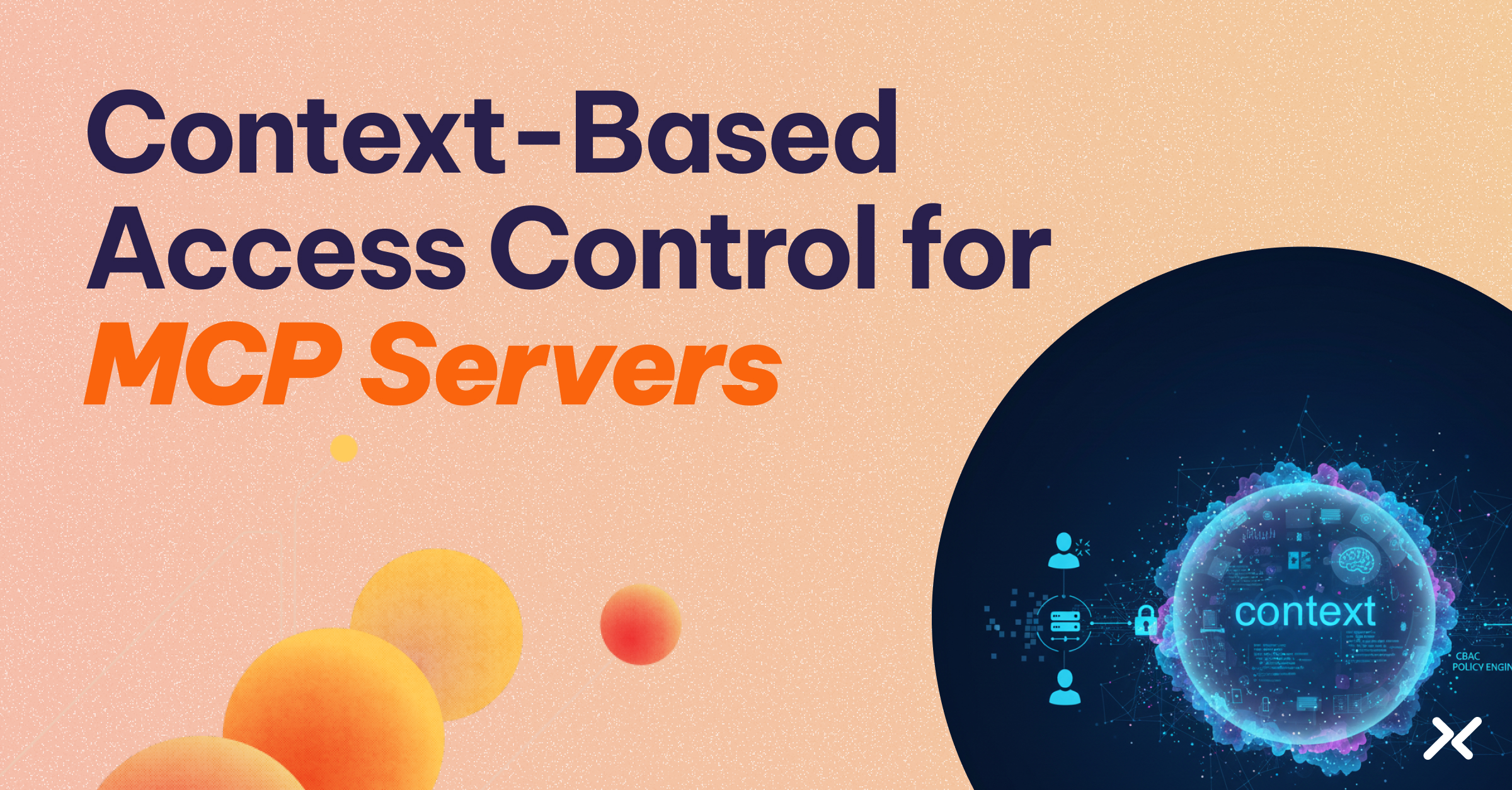
This necessity drives the move to context-based access control, or CBAC. In MCP, it is not just who is making a request; it is also what context they carry and what they intend to do with it.
Why Static ACLs Aren’t Enough in MCP
Static ACLs rely on predefined allow and deny rules that assume consistent conditions. They grant permissions based on fixed identities or roles, which creates three major vulnerabilities in MCP environments.
- Inability to adapt to runtime context: Static rules cannot tell the difference between a normal request and one that is a security risk. For example, an agent may be approved for a tool under normal conditions, but that same agent becomes a risk when it is processing sensitive patient data or unverified user input.
- Blind spots in multi-agent workflows: As requests move between agents, their context evolves, but static ACLs evaluate each step independently. This creates large blind spots where sensitive data can flow to unauthorized components, even if every agent is authenticated properly.
- Forced overprovisioning: To prevent workflows from failing, teams are often forced to give agents broad permissions that violate the principle of least privilege. An agent receives access to all possible resources instead of only the ones appropriate for its current context. This creates a persistent security exposure that cannot be adapted when conditions change.
Imagine a health care AI agent that has permission to access diagnostic tools. A static ACL grants this access based on the agent’s identity. But when that agent processes a request containing personally identifiable health information, or PHI, those same permissions allow context to bleed into tools that are not designed to handle sensitive data. The ACL cannot tell the difference between a routine diagnostic query and a request carrying PHI.
What is Context-Based Access Control (CBAC)?
Context-based access control evaluates three dimensions simultaneously: identity, context and resource. Each dimension contributes essential information for a secure authorization decision.
The Three-Dimensional Framework
- Identity: First, the system verifies who is making the request. This establishes the “who,” but it is not enough on its own.
- Context: Next, the system examines what information the request is carrying, including its sensitivity, content type and origin.
- Resource: Finally, the system determines which specific tool, API or server the request is targeting.
This three-dimensional approach prevents context bleed that single-factor authorization cannot address.
Dynamic Policy Evaluation
CBAC policies are dynamic, not hard-coded. The policy engine processes all three dimensions at runtime and adapts its decisions to current conditions. Access might be permitted, denied or even transformed – for example, by redacting data, rerouting the request or requiring additional verification. This policy-driven approach eliminates the static assumptions that create vulnerabilities.
Context-Sensitive Authorization in Practice
Real-world MCP implementations use context-sensitive authorization to prevent security failures that static ACLs miss. For example, sensitive data flow restrictions prevent contexts containing personally identifiable information, or PII, from being routed to untrusted tools. An agent handling customer financial data receives different authorization than that same agent processing anonymized analytics. The policy engine evaluates data classification markers within the context and blocks routing to tools that lack appropriate data handling capabilities.
Risk-based authorization takes a different approach by downgrading access for agents processing unverified input. When user-supplied data enters a workflow, subsequent tool access receives heightened scrutiny. The same agent receives full privileges for internally generated contexts but limited access when processing external input that may contain injection attempts or malicious payloads. This dynamic adjustment happens automatically based on the context’s origin and validation status.
Environmental factors also influence authorization decisions through conditional access policies. A tool may be available only when requests originate from approved cloud environments or meet specific security posture requirements. An agent in a development environment cannot access production tools, regardless of its identity credentials. The authorization system evaluates not just who is requesting access, but where that request originates and what security controls are in place.
Multifactor context checks combine identity with request type and context integrity to create comprehensive authorization decisions. A verified agent requesting database access must also present context that matches expected patterns and originates from validated sources. This layered approach prevents credential theft from enabling unauthorized data exfiltration, because stolen credentials alone cannot replicate the full context signature that legitimate requests carry.
Benefits of Context-Based Models
Context-based authorization provides security improvements that are impossible with static approaches, while still maintaining operational flexibility.
- Dynamic least privilege: CBAC grants only the access required for the current context. Authorization adapts in real time, so agents have only the capabilities appropriate for each specific request.
- Prevents context leakage and data exposure: This model stops sensitive information from flowing into unauthorized tools. The policy engine enforces routing restrictions based on context classification, ensuring sensitive data cannot reach the wrong tools.
- Ephemeral workload security: CBAC is effective in dynamic environments where static ACLs cannot keep up. As workloads spin up and down, context-based policies evaluate current runtime conditions instead of requiring constant manual updates.
- Zero trust at the context level: Zero trust principles extend to the context itself. With CBAC, every context is treated with suspicion, regardless of its source. Each one is classified and evaluated before any routing decisions are made. This prevents trusted agents from becoming vectors for data exposure through context manipulation.
Implementing Context-Based Access Control
Successfully implementing CBAC for MCP environments requires several foundational capabilities that work together to enable context-sensitive authorization. Organizations need to start with strong workload identity that establishes cryptographic verification for every agent and server. Each agent and server needs a cryptographically verifiable identity tied to its runtime environment, not static credentials. This allows the policy engine to confirm the workload is who it claims to be before evaluating the context it carries and the resources it is requesting.
Context classification systems form the next critical layer. These systems categorize data based on sensitivity and policy requirements as close to the data’s origin as possible. This way, the data is already marked for downstream authorization decisions. When a request arrives carrying customer financial data, the classification is embedded in the context itself, allowing the authorization system to immediately apply appropriate restrictions without requiring manual inspection or external lookups.
The runtime policy engine sits at the heart of the system, processing identity, context and resource dimensions simultaneously and in real time, all without introducing latency that would degrade performance. This engine evaluates conditional access rules that incorporate identity verification, security posture assessment and resource requirements at the same time. It defines acceptable combinations rather than granting blanket permissions and adapts its decisions to current conditions instead of relying on static rules that quickly become outdated.
Comprehensive auditability closes the loop by providing a way to trace every access decision back to the specific identity, context and policy factors that determined the outcome. This visibility is essential for compliance and incident response. When an audit question arises about why a particular agent accessed a sensitive resource, the logs show not only that access occurred, but the complete context that justified it, the policy rule that permitted it and the credentials that were issued.
Common Implementation Pitfalls
Organizations implementing CBAC often stumble on predictable challenges. Overly complex policies that accumulate exceptions over time become unmaintainable, with no one fully understanding the authorization logic anymore. Poor visibility into context flow prevents teams from understanding how data moves through systems, making it impossible to write effective policies or investigate incidents. Perhaps most dangerous is blind trust in static tokens or role-based models that simply recreates the vulnerabilities CBAC is meant to eliminate, only with more ceremony around them.
The Path Forward
Modern workload identity and access management platforms enable organizations to implement these principles without building custom policy engines or maintaining complex ACL hierarchies. By treating context as the security boundary where authorization decisions occur, organizations can secure their sensitive MCP flows without sacrificing the flexibility that makes the protocol valuable. This approach replaces the outdated assumption that identity alone is enough for trust with a more nuanced model that evaluates the full picture of who is requesting access, what they are carrying and what they are trying to reach.