

User IAM, encompassing traditional user identities and their access rights within systems, has been a cornerstone of cybersecurity for many years. It benefits from a wealth of experience, established practices, and advanced technologies, as well as regulatory frameworks that guide its implementation and maintenance.
Conversely, the process of securing identities and access rights for non-human identities represents a much more nascent domain, but no less critical. It is tasked with addressing the unique challenges that emerge from the relatively recent upsurge of cloud-native architectures, adoption of microservices, and prevalence of automated IT operations.
This facet of IAM is being shaped by the need to secure application-to-service interactions in environments where manual interventions, such as credential rotations and developers building and maintaining auth code, are unsustainable; static identity secrets are commonplace and pose additional security risks; and traditional user-centric security models, like multifactor authentication and privileged access management, can’t neatly be translated over from human to machine. Secure workload access instead requires alternative approaches to identity and access management, such as leveraging automation to minimize secrets rotation, dynamic policy-based access control, and conditional access based on workload security posture.
The good news is the gap in maturity between user and nonhuman is narrowing as awareness grows about the importance of securing the interactions between software workloads with the same rigor applied to user access.
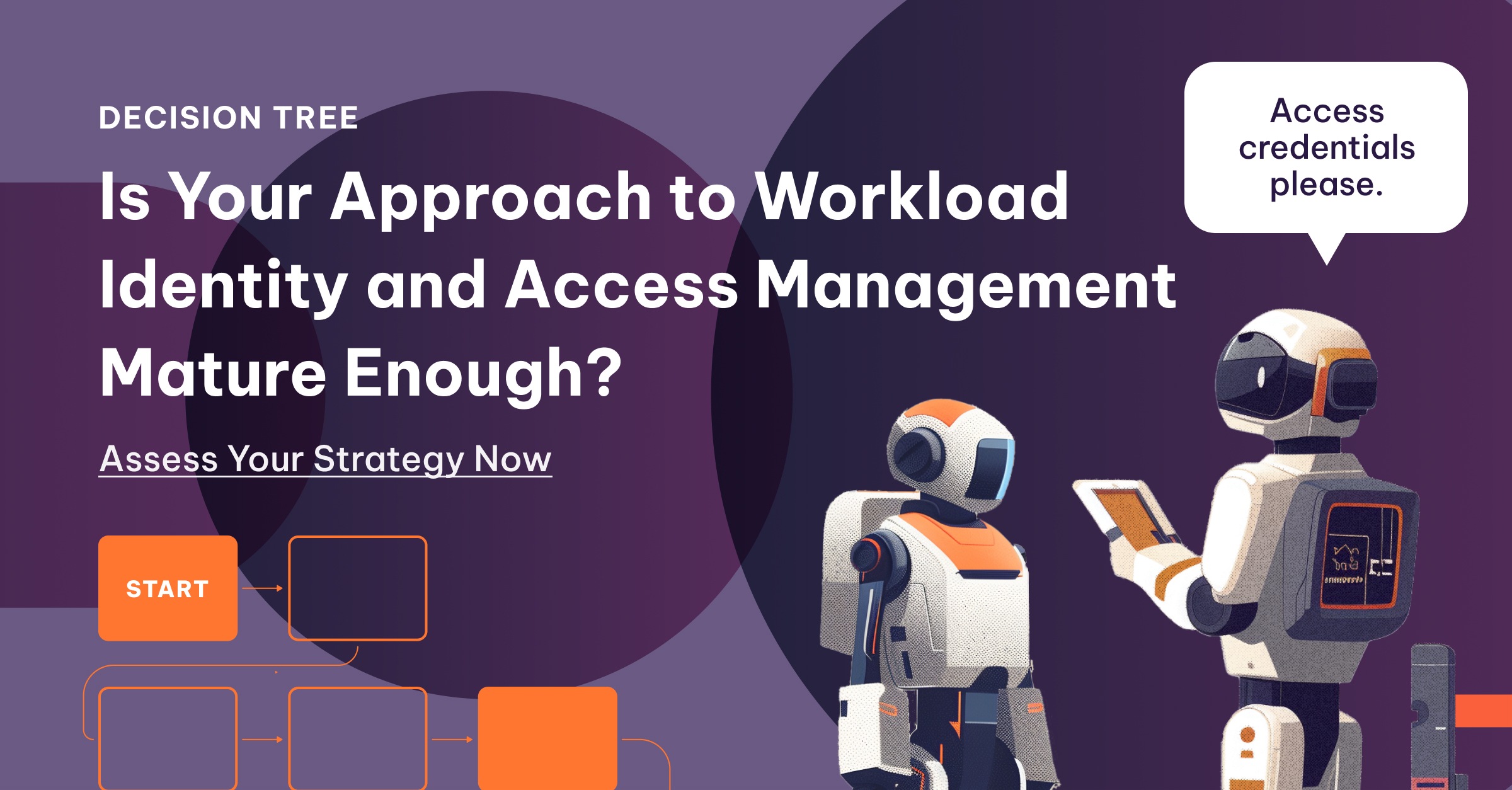
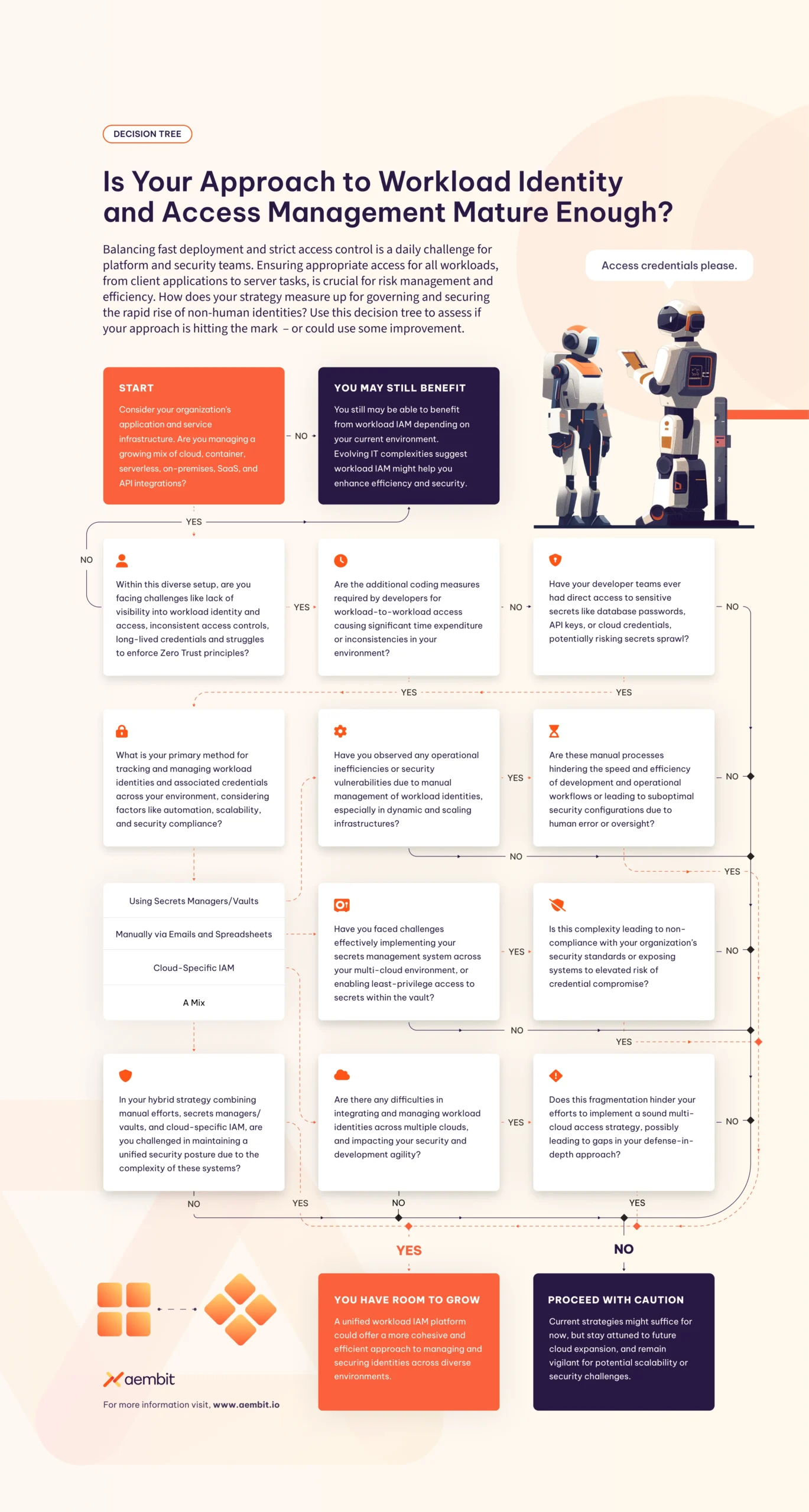
This decision tree-style flow chart takes you through a series of questions about your organization’s IT infrastructure, workload access controls, and general identity management practices. While this exercise is not meant to be scientific, it will help you efficiently evaluate whether you have some weaknesses in strategy that you may be overlooking – or putting off. All you need to do is walk up to the starting line, and, as they say, choose your own adventure.
Ready, set…go!

The Workload IAM Company
Manage Access, Not Secrets
Boost Productivity, Slash DevSecOps Time
No-Code, Centralized Access Management